

Do Solar Panels Work on Rainy & Cloudy Days?
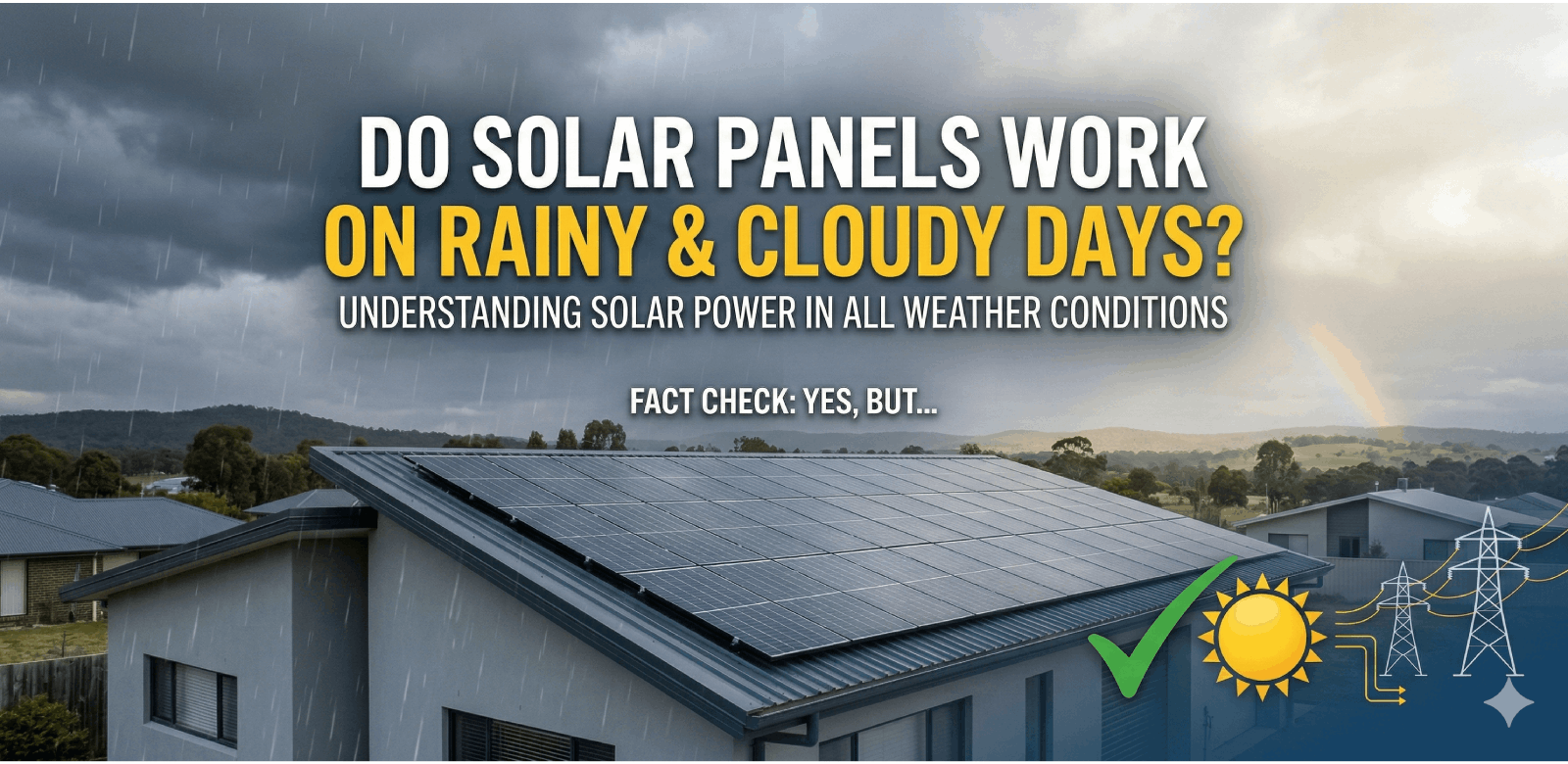
Imagine this—monsoon clouds gather, the sky turns grey, and heavy rain lashes down. You glance at your rooftop solar panels and a thought creeps in: ‘Did my investment just go useless in this weather?’ This is one of the most common fears people have before going solar. The truth, however, is far more surprising—and reassuring. Solar panels don’t just survive cloudy and rainy days, they keep working in ways most people don’t realize. Let’s bust the myths, look at real numbers, and uncover why rain might actually be your panel’s secret friend.
How Solar Panels Actually Generate Power (The Science Behind the Myth)
You might think solar panels need blazing sunlight to work—but that’s not true. They don’t actually rely on heat; they rely on sunlight photons. Even when clouds cover the sky, sunlight still filters through—diffused, softer, but very much usable.
Think of it like this: a plant can grow under a cloudy sky, not just under direct sun. Similarly, solar panels convert whatever light reaches them into electricity.
In fact, some of the cloudiest countries in Europe, like Germany and the UK, are among the largest solar adopters in the world. If solar panels can power homes there, monsoon-season India is far from powerless.
Solar Panel Performance on Cloudy and Rainy Days
Even on the gloomiest of days, solar panels keep producing electricity—just at a slightly reduced rate. On a cloudy day, a solar panel typically generates 10–30% of its usual output, depending on the thickness of the clouds and panel efficiency.
Rainy days have a hidden bonus: the rain cleans dust and debris from your panels, which can actually increase efficiency once the clouds clear. For example, a 5kW solar system that usually produces ~20 units per day might still generate 5–7 units during a downpour.
Indian cities with heavy monsoon, like Mumbai, Kolkata, and Bangalore, still benefit from rooftop solar. Thanks to diffused sunlight, your panels continue producing power even when you can’t see the sun.
Do You Need Batteries or Grid Support?
Many people worry that cloudy or rainy days mean no electricity—but modern solar systems are designed to handle it.
On-Grid Systems: These systems stay connected to the electricity grid. When your panels generate less power on a cloudy day, the grid automatically supplies the difference. You never experience downtime.
Off-Grid or Hybrid Systems: Here, batteries store surplus power from sunny hours. This stored energy can be used during rainy or overcast periods, ensuring uninterrupted electricity for your home.
With the right system design, you don’t have to fear monsoons or cloudy weeks. Your solar investment keeps working rain or shine, giving you both peace of mind and steady savings.
Factors That Improve Solar Panel Efficiency in Rainy or Cloudy Weather
Even on grey, rainy days, the right setup can maximize your solar output. Here’s how:
- High-Efficiency Solar Panels: Mono PERCand TOPCon panels perform better in low-light conditions compared to polycrystalline or older models. Investing in high-efficiency panels ensures consistent energy generation even during overcast days.
- Bifacial Panels: Unlike traditional panels, bifacial solar modules capture sunlight from both sides. This means reflected or diffused light during cloudy weather still contributes to electricity production.
- Correct Tilt Angle: Properly angled panels capture more sunlight, even when it’s indirect. A small adjustment in tilt can significantly improve efficiency during monsoon or winter months.
- Regular Cleaning: Rain can help in
- Smart System Design: Combining panels with batteries or hybrid solar inverters ensures that low-output days don’t leave you powerless.
Different solar systems (on-grid, off-grid, hybrid) have varying costs and efficiencies, which influence payback time.
Myths vs Facts About Solar Panels in Monsoon
Many homeowners hesitate to invest in solar panels because of common misconceptions. Let’s bust the biggest myths:
- Myth 1: Solar panels don’t work without direct sunlight
Fact: Panels generate electricity from diffused sunlight. Even on cloudy days, your system continues to produce power.
- Myth 2: Rain damages solar panels
Fact: Solar panels are waterproof and weather-resistant. Rain actually cleans the panels, improving efficiency once the sun comes back.
- Myth 3: Monsoon makes solar useless
Fact: Output may drop temporarily, but solar panels still produce electricity. Combined with batteries or grid support, you never run out of power.
- Myth 4: Solar panels require constant maintenance in rain
Fact: Modern systems are built for Indian weather. Regular checks are enough; heavy rains don’t require extra intervention.
By separating fact from fiction, you can see why solar panels remain a reliable, long-term investment, no matter how unpredictable the weather gets.
Should You Invest in Solar Panels if You Live in Rainy Areas?
If you live in a region with heavy rain or frequent cloudy days, you might wonder: “Is solar even worth it here?” The answer is a resounding yes.
Even in monsoon-heavy areas, solar panels continue to produce electricity, and with the right system, your long-term savings remain huge. Modern panels are built to withstand Indian weather extremes, from heavy rains to high humidity. On top of that, government subsidies and long term warranties make investing in solar panels both safe and financially smart.
In short, rainy days are no reason to delay—your rooftop solar system keeps working, rain or shine, saving you money every month.
Final Thoughts
So, do solar panels stop working when it rains or clouds cover the sky? Absolutely not. They may produce slightly less electricity, but they never shut down. In fact, rain often acts as a natural cleaner, washing away dust and debris, which can boost efficiency once the sun returns.
Your solar system, when paired with a smart inverter, battery, or on-grid connection, ensures that your home or business keeps running year-round, monsoon or not.
Investing in solar is not just about sunny days—it’s about reliable, sustainable energy every day of the year.
Take Action: Don’t let cloudy skies stop you from saving on electricity bills. Contact UTL Solar today to design a system that works rain or shine and take full advantage of green and sustainable energy.
Ellence Energy