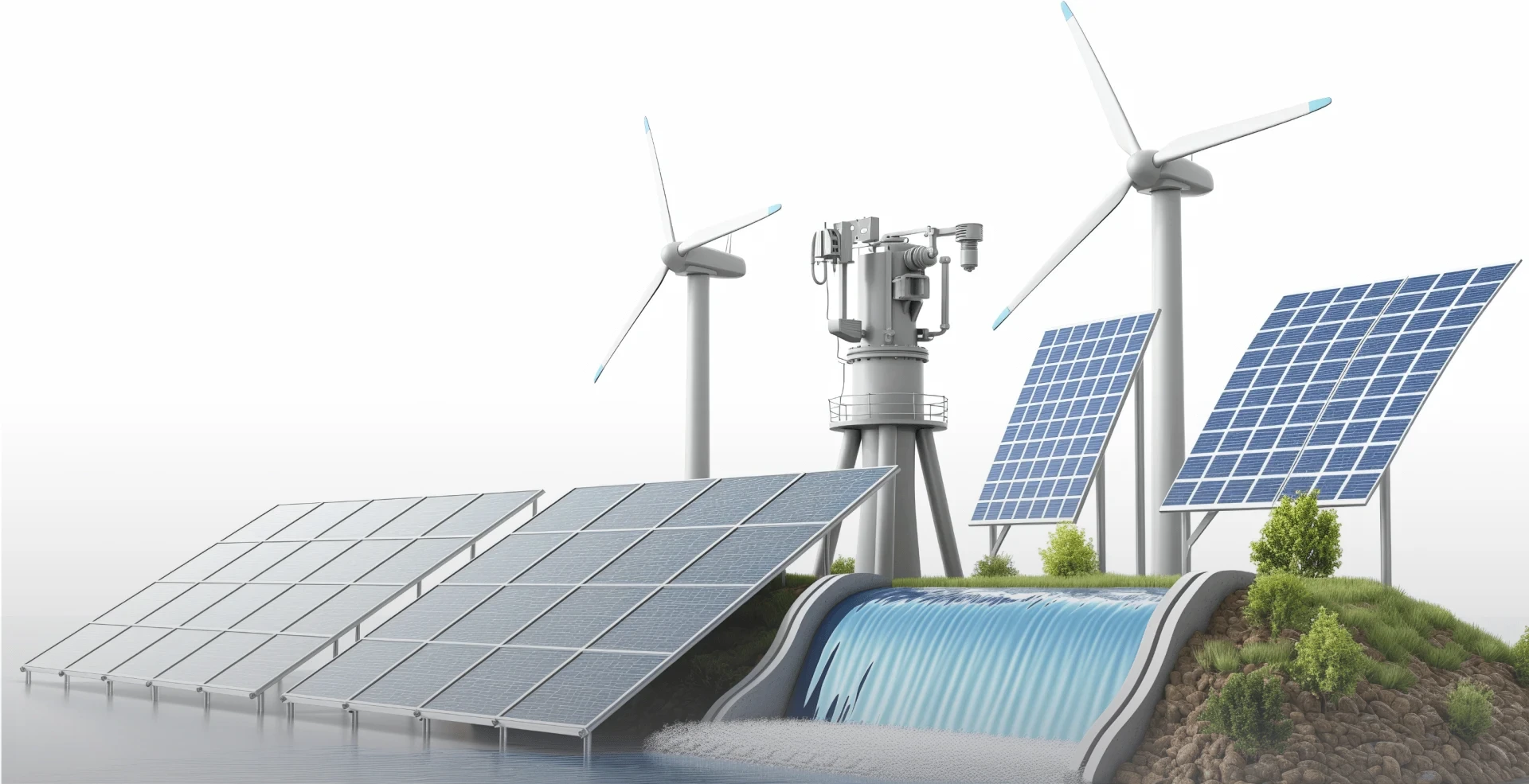

Floating Solar Photovoltaic (FPV) Systems — Solar on Water. Power Without Land.
Ellence Energy LLP is at the forefront of designing and installing floating solar PV systems on reservoirs, lakes, ponds, and water bodies — generating clean energy without occupying a single square metre of land.
What Is Floating Solar (FPV)?
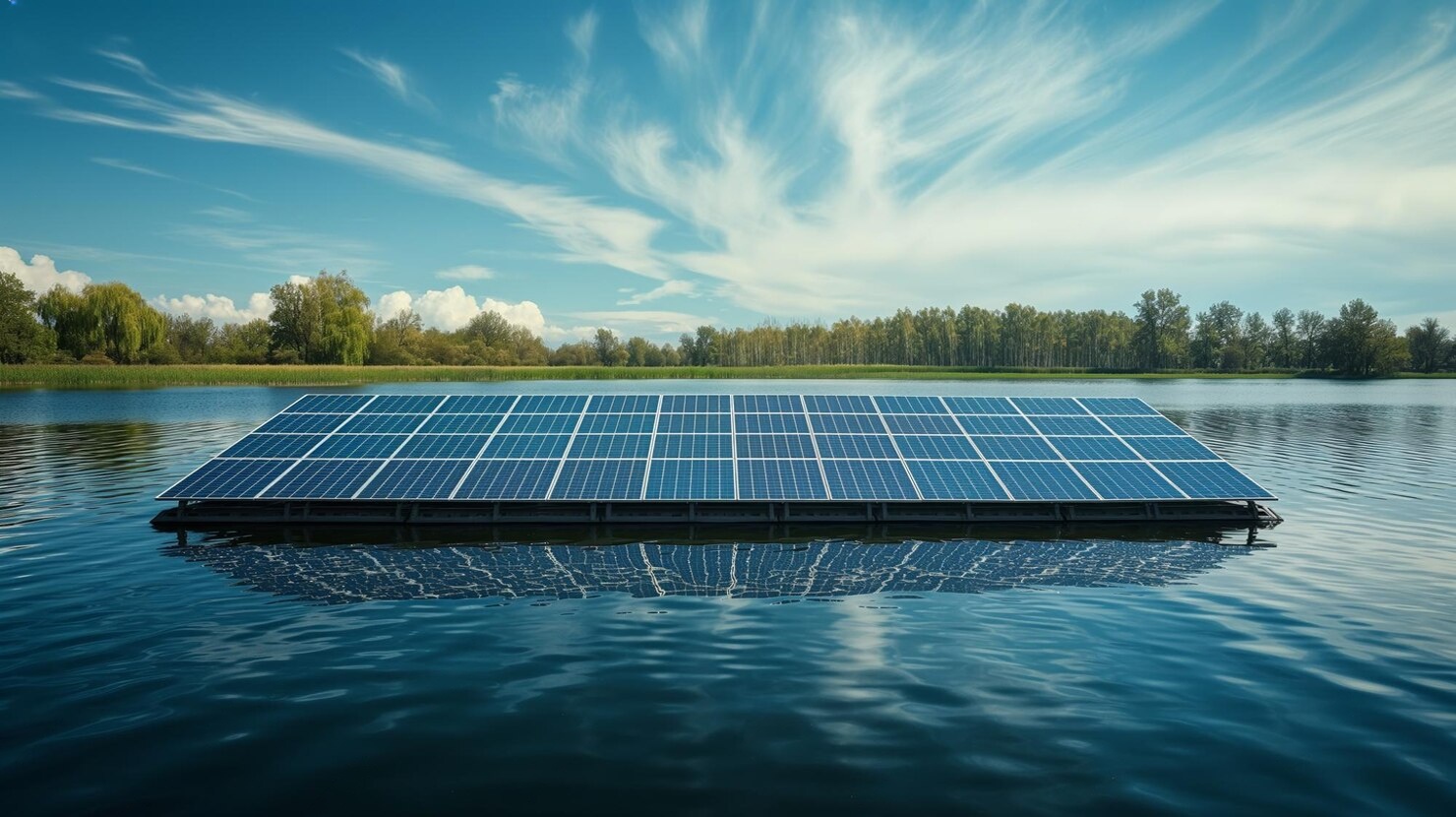
Floating photovoltaic (FPV) systems mount solar panels on buoyant structures placed on the surface of water bodies — reservoirs, lakes, ponds, canals, and irrigation tanks — generating clean energy without using land.
Ellence Energy LLP is at the forefront of designing and installing floating solar photovoltaic (FPV) systems across India. As land becomes increasingly scarce and expensive for solar development, floating solar offers a powerful alternative — generating renewable energy from the surface of water bodies that would otherwise remain underutilised.
Our floating solar projects are engineered to perform in India's diverse water environments — from Gujarat's large irrigation reservoirs to industrial water storage ponds — using marine-grade materials, certified pontoon systems, and advanced mooring designs.
Effective utilisation of water bodies to generate clean energy without occupying valuable land resources — ideal for land-scarce regions.
Floating solar panels reduce water evaporation from reservoirs by up to 30% — aiding water conservation in drought-prone regions of Gujarat and Rajasthan.
Eco-friendly installations that minimise environmental disruption — no land clearing, no excavation, no habitat destruction required.
Durable floating solar systems designed to withstand varying water levels, monsoon flooding, wind loads, and harsh weather conditions across all seasons.
Why Floating Solar Outperforms Land-Based Solar
Floating solar photovoltaic systems deliver measurable performance, environmental, and economic advantages over conventional ground-mounted solar installations.
10–15% Higher Energy Yield
Water naturally cools floating solar panels, keeping module temperatures lower than ground-mounted installations — improving efficiency and generating 10–15% more energy per kWp installed.
Zero Land Requirement
Floating solar systems use the surface of existing water bodies — reservoirs, ponds, canals — freeing valuable agricultural and commercial land for other uses while generating clean energy.
Reduces Evaporation by Up to 30%
Solar panels shading the water surface significantly reduce evaporation from reservoirs — a critical benefit for water-stressed regions across Gujarat, Rajasthan, and Maharashtra.
Suppresses Algae Growth
By reducing sunlight penetration into the water body, floating solar panels inhibit algae and phytoplankton growth — improving water quality in irrigation reservoirs and drinking water sources.
Dual Use with Hydropower
Floating solar systems installed on hydropower reservoir surfaces complement existing hydro generation — using shared grid infrastructure and reducing curtailment during peak solar hours.
Faster Deployment
Floating solar systems require minimal civil work compared to ground-mounted projects — no land clearing, no massive foundation work — enabling faster commissioning timelines.
How Ellence Energy Builds a
Floating Solar Project
A structured end-to-end EPC process — from site assessment to commissioning — ensuring every floating solar project is safe, efficient, and built to last.
Water body survey, bathymetry, wind analysis, water level variation study, solar irradiance data, and grid connectivity assessment.
Pontoon layout, mooring design, cable routing, structural analysis, PvSyst yield simulation, and full technical drawings package.
Environmental clearances, water body permissions, DISCOM interconnection, MNRE FPV guidelines compliance, and all statutory approvals.
Marine-grade pontoon assembly, module mounting, mooring installation, underwater cable laying, inverter setup, and grid synchronisation.
Specialised floating solar O&M — pontoon inspection, waterproof cable checks, SCADA monitoring, cleaning, and annual performance reporting.
Floating Solar vs Ground-Mounted Solar
See how floating solar photovoltaic (FPV) systems compare to conventional ground-mounted solar across key parameters.
| Parameter | 🌊 Floating Solar (FPV) | 🌱 Ground-Mounted Solar |
|---|---|---|
| Land Requirement | ✓ Zero — uses water surface | Requires dedicated land area |
| Energy Yield | ✓ 10–15% higher (cooling effect) | Standard yield |
| Water Conservation | ✓ Reduces evaporation 20–30% | ✗ No water benefit |
| Algae Suppression | ✓ Reduces sunlight penetration | ✗ Not applicable |
| Civil Work Required | ✓ Minimal — no excavation | Extensive foundations needed |
| Installation Speed | ✓ Faster deployment | Longer civil timeline |
| Suitable for India | ✓ Reservoirs, ponds, canals | ✓ Open land, rooftops |
| O&M Complexity | Moderate — specialised marine | ✓ Standard maintenance |
| Cost per kWp | Slightly higher capex | ✓ Lower capex |
Where Can Floating Solar Be Installed?
Floating solar systems can be deployed on a wide range of water bodies — from small farm ponds to large utility-scale reservoirs across India.
Irrigation Reservoirs
State irrigation reservoirs and dams — dual benefit of power generation and reduced evaporation
Industrial Effluent Ponds
Industrial water storage, effluent treatment ponds, and cooling water reservoirs at factories
Farm Ponds & Check Dams
Agricultural farm ponds and check dams — powering irrigation pumps while conserving water
Hydropower Reservoirs
Complementing existing hydropower plants with floating solar on reservoir surfaces
Municipal Water Bodies
City lakes, sewage treatment plant ponds, and municipal water storage tanks
Canals & Waterways
Irrigation canals — canal-top solar is a proven model with dual land-and-water saving benefits
Mining Pits & Quarries
Flooded quarry pits and mining water ponds — converting liabilities into productive solar assets
Utility-Scale Projects
Large-scale floating solar parks from 1MW to 100MW+ for utilities, PSUs, and IPPs
Why Choose Ellence Energy for Your
Floating Solar Project?
India has over 18,000 water bodies suitable for floating solar. The government has set a target of 10 GW of floating solar by 2030 — creating massive opportunity for early movers.
Specialised FPV Engineering Expertise
In-house engineering team experienced in floating solar design — pontoon layout, mooring analysis, underwater cable routing, and marine-environment structural design.
MNRE FPV Guidelines Compliance
All floating solar projects designed and installed per MNRE's Floating Solar Guidelines — ensuring bankability, regulatory compliance, and eligibility for government schemes.
Marine-Grade Materials Only
HDPE pontoons, stainless steel fasteners, UV-resistant cables, waterproof junction boxes, and corrosion-resistant mounting hardware — built for decades of water environment operation.
Complete EPC — Site to Commissioning
End-to-end floating solar EPC — from feasibility study, design, and approvals through installation, testing, grid connection, and specialised floating solar O&M contracts.
Specialised Floating Solar O&M
Post-commissioning O&M tailored for floating solar — pontoon inspection, waterproof cable checks, aquatic environment monitoring, and cleaning protocols specific to water installations.
Everything You Want to Know About Floating Solar (FPV)
A floating solar photovoltaic (FPV) system is a solar power plant where solar panels are mounted on buoyant structures — typically HDPE pontoons — floating on the surface of a water body such as a reservoir, pond, lake, or canal. FPV systems generate clean electricity from solar energy while conserving land and reducing water evaporation. They are particularly valuable in India where both land and water are scarce resources.
Water naturally cools the solar panels in a floating solar system. Solar panels are more efficient at lower temperatures — every 1°C reduction in module temperature increases output by approximately 0.4%. Since floating panels remain cooler than ground-mounted panels (which heat up from reflected radiation), floating solar systems typically generate 10–15% more energy per kWp installed compared to equivalent ground-mounted systems.
Floating solar systems can be installed on reservoirs, irrigation tanks, check dams, farm ponds, hydropower reservoirs, industrial effluent ponds, municipal water bodies, mining pit ponds, and irrigation canals. The key requirements are a minimum water depth (typically 1.5m+), stable water level variation, and access to grid connectivity. Ellence Energy conducts a detailed site feasibility study to confirm suitability before design begins.
Yes. Properly designed floating solar systems use HDPE pontoons — a food-grade, chemically inert plastic — that does not leach chemicals into the water. The shading effect actually improves water quality by suppressing algae growth. All cables and junction boxes are waterproof rated to IP68 standards. Ellence Energy follows MNRE FPV guidelines and conducts environmental assessments as part of every project to ensure zero negative impact on the water body or aquatic life.
Floating solar systems typically have a capital cost 10–20% higher than equivalent ground-mounted installations, primarily due to the additional pontoon, mooring, and marine-grade component costs. However, the higher energy yield (10–15%), land cost savings, and water conservation benefits significantly improve the overall project economics — often resulting in a comparable or better levelised cost of energy (LCOE) compared to ground-mounted solar, especially in land-constrained locations.
Yes. Ellence Energy provides complete support for all floating solar project approvals — including water body usage permissions from the relevant state water resource or irrigation authority, environmental clearances, DISCOM interconnection applications, MNRE compliance documentation, and any local government permits. Our experienced team has navigated these regulatory processes across multiple states in India.